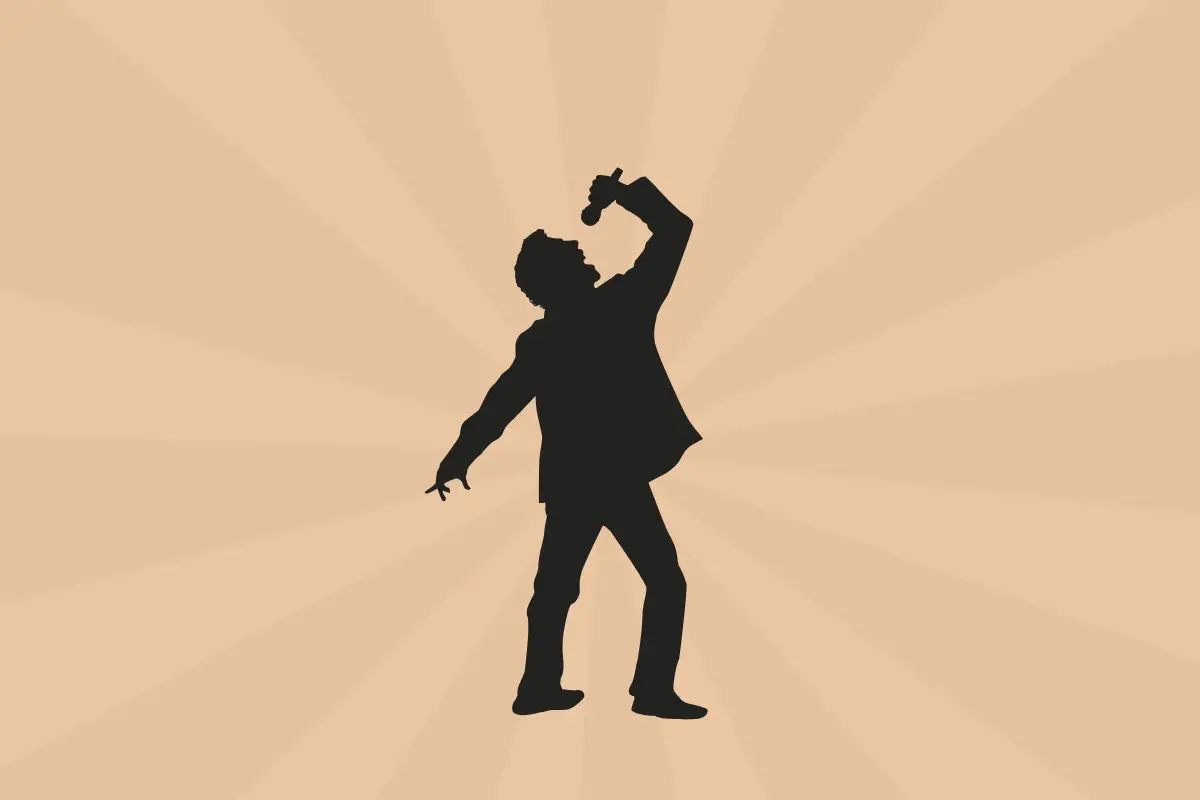
In 1972, an Italian pop singer named Adriano Celentano released one of the strangest hit songs in music history. It was called “Prisencolinensinainciusol,” and if you hear it without knowing anything about it, you might assume you’re listening to an American singer performing in English. The rhythm of the language sounds like English. The cadence sounds like English. The phrasing sounds a lot like English. It has the unmistakable quality of someone singing words you don’t quite understand but somehow feel like you should.
There was just one problem.
It wasn’t English. It wasn’t really any language at all.
Italy, 1972
It sounded like it meant something. It didn’t.
Everything about it sounded like English, except the part where words mean things. It still reached number one in Italy.
Celentano had deliberately invented a series of nonsense syllables designed to mimic the sound of American English. He was fascinated by the way English sounded to Italians who didn’t speak it, and he wanted to create a song that captured the experience of hearing a language without actually understanding it. And somehow, against all odds, his experiment worked.
A song that didn’t actually say anything became incredibly popular because it sounded like it was saying something. In some ways, I wonder if many creative pros are approaching our own version of “Prisencolinensinainciusol.”
Fluency is not meaning.
We are living through an extraordinary moment in which our devices can produce almost anything we ask. Type a prompt and any LLM can respond to an email, spit out a strategy or presentation or marketing campaign, develop a speech or an image, or crank out a dozen ideas before you’ve finished your first cup of coffee. And increasingly, the output doesn’t just look competent, it actually sounds competent. It has the cadence of intelligence.
From the outside, they look exactly the same.
But there’s a difference between producing something that sounds meaningful and actually having something meaningful to say. A beautifully written paragraph can contain no original thought, just like a polished presentation can communicate no real conviction. A clever strategy can simply rearrange familiar ideas that feel vaguely like something we’d choose but are actually just mimicking popular, and staid, advice.
We can create work that has all the external signals of quality while quietly removing the very thing that makes quality possible: a human being who has wrestled with an idea long enough to develop a perspective on it. These new tools will almost certainly make us more productive, but the danger is that they might make us so productive that we stop honing and defining our own positions and intuition.
The struggle gives the meaning.
The strange thing about creative work is that the part we most want to eliminate, because it’s uncomfortable, is often the part that makes the work valuable. None of it feels particularly productive in the moment. But it’s often where our best, most insightful, most intuitive thinking happens.
Sort your friction
Automate one column. Protect the other.
In the way of the work
Hand it to the tools. Aggressively.
- Formatting the deck
- Scheduling the meeting
- Transcribing the call
- Hunting for the file
- Summarizing the thread
The work itself
Keep it. It’s supposed to change you.
- The blank page
- The terrible first draft
- The twenty bad ideas
- The uncomfortable question
- The afternoon staring at the problem
I’m not arguing that we should reject these tools. Quite the opposite. We should use them aggressively where they genuinely help us. But if we use technology to remove every moment of friction from the creative process, we may accidentally remove the very friction that produces insight.
Let them handle the friction that’s in the way of the work, but not the friction that is the work.
We should be careful about outsourcing the parts of the process that are supposed to change us. The goal of creative work isn’t merely to arrive at an answer, it’s to grow into the kind of person who can see something that wasn’t obvious before. To hone our intuition and judgment.
Standing next to work is not doing it.
This is why I think human-led, intuitive work will become even more valuable in the years ahead. Genuinely human work will begin to stand out more and more, because it will feel like someone actually thought about this. It will contain:
That’s the irony of Celentano’s strange little song. The words were meaningless, but the idea behind the song was meaningful. The nonsense was actually communicating something real: what it feels like to hear a language you don’t understand.
The Infinite Lever
Three traps. One root cause.
AI is an infinite lever: minimal input, massive output. When the human effort disappears entirely, we fall into three traps, all variations on the same problem, trading long-term capacity for short-term output.
Before you hit send
Five questions to ask every time you use AI.
Check the ones you can answer with a clear yes.
We have more tools than ever for making things that sound like they mean something, so our responsibility is to make sure they actually do. Use the tools, just don’t let them do your thinking for you.
The future won’t belong to the people who can produce the most. It will belong to the people who still have something worth saying.
And to those who have done the thinking necessary to say it.
Hear the full episode. Daily Creative, episode 128: The Future Belongs to Those With Something to Say.
Listen to episode 128
Todd Henry
Todd teaches leaders and teams how to be brave, focused, and brilliant. He’s the author of seven books, including Herding Tigers and The Brave Habit, and host of the Daily Creative podcast.