Years ago, home sick on a Wednesday afternoon and bored out of my mind, I landed on a public television show hosted by a physicist named Dr. Julius Sumner Miller. He laid a thin wooden plank on a table with about a third of it hanging off the edge, smoothed a sheet of newspaper over the rest, and asked the camera what would happen when he struck the end that was sticking out. I was sure the newspaper would go flying. Instead, his hand snapped the plank in two. It wasn’t the newspaper holding the wood in place. It was the air. Nearly fifteen pounds of atmospheric pressure were pressing on every square inch of that paper, an invisible force that had been there all along, and until that moment I had never once considered it.
I think most of us treat our creative process the same way. We know it’s there, we depend on it every day, and we pay attention to it only when it stops working, a little like a household appliance that hums along in the background until the day we’re stuck with a load of dirty socks. Because we can’t see it, we assume it’s beyond our influence. But like atmospheric pressure, once you understand a few of the forces that govern it, you can build structure that puts those forces to work for you.
That’s the premise of The Accidental Creative. If you make a living with your mind, solving problems, developing strategies, designing, writing, managing, or leading, I’m going to call you a creative, even if you never set out to be one. Maybe you ended up a creative accidentally. Either way, you’re paid for the value you create, and that comes with a unique set of pressures. What follows is a walk through the core ideas of the book, and the practices that can help you be brilliant when it counts the most.
Create on demandYou’re paid to be brilliant at a moment’s notice.
Years ago my company coined a term for the world most of us work in: create on demand. Every day you go to work tasked with inventing brilliant solutions that meet specific objectives by defined deadlines. If you do that successfully, you get to keep your job. If you don’t, you get to work on your résumé. The moment you exchange your creative efforts for money, you enter a world where you will have to be brilliant at a moment’s notice.
Because ideas seem to be a free and renewable resource, it’s easy for you, and for your boss, to believe you can keep ratcheting up your output without side effects. That belief is false, and it’s damaging. To attempt to be perpetually brilliant and increasingly productive, without changing the basic habits and structure of your life to accommodate that undertaking, is a futile effort. Most of us approach our work in an always-on manner, but the creative process is naturally rhythmic. There are peaks and troughs, an ebb and flow to how ideas arrive. Trying to force better ideas by working longer and staring harder at the problem is like trying to control the weather by staring at the clouds.
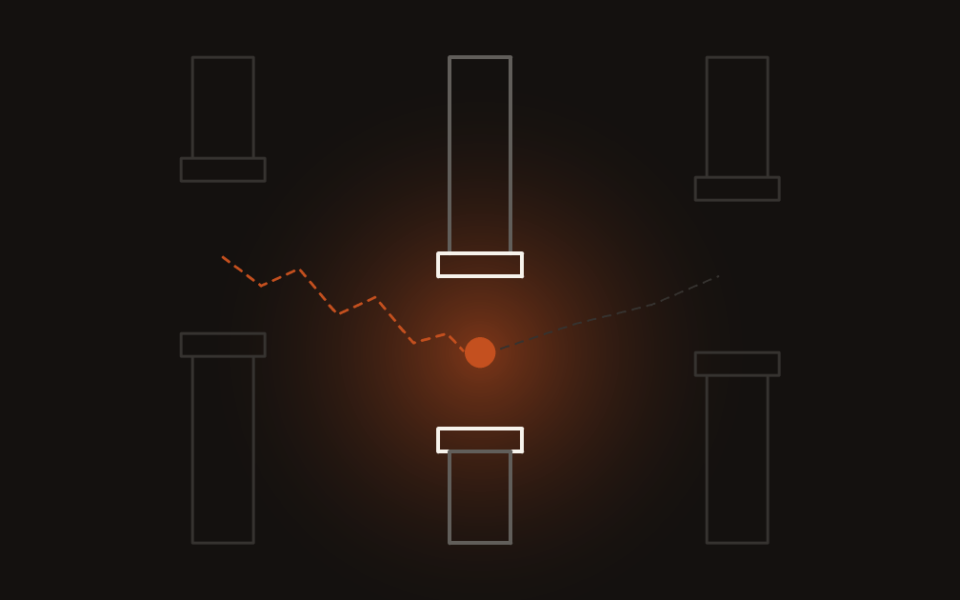
Whenever I speak to a group of creatives, I challenge them to adopt one goal: be prolific, brilliant, and healthy, which means producing a large volume of great work over a long period of time. In my experience, most people do very well at two of the three and quietly neglect the third.
Prolific, brilliant, and healthy
Two out of three isn’t enough.
Each pairing works for a while. Each one eventually costs you something you can’t afford to lose.
Hard work is an absolute necessity if you want to do anything worthwhile. If you apply these principles, you may well end up working harder than you ever have. What you want to avoid is the frenetic activity that looks like productivity but is really about the appearance of being busy. You want to work strategically, not desperately.
When it comes to your effectiveness, fake work is often more dangerous than no work at all.
Your missing piece
Look honestly at the last month.
Not your best month, and not the month you hope to have next. Which of the three has been slipping?
Choose one. Then read the rest of this with that one in mind.
Structure and freedomTotal freedom is false freedom.
The suggestion that structure and creativity belong together often raises eyebrows. There is a persistent myth that creativity only happens in the complete absence of boundaries. In reality, we need boundaries to channel our creative energy in the right direction. I once worked with a brilliant, capable manager who had been building a business on the side for years while holding down his corporate job. When he finally left to pursue it full time, he expected his productivity to soar. Instead, it collapsed. His motivation hadn’t changed. What changed was that the rhythms his day job had imposed on him were suddenly gone. Once we built some simple structure back into his week for creating, strategy, and relationships, his productivity took off again.
Don’t confuse structure with formula, though. A formula is something you apply to get a predictable result. There is no formula for effective creating, and there are no shortcuts to experiencing brilliance when you need it. Structure is something different. It’s the platform that gives you enough stability to feel free to take risks.
True freedom has healthy boundaries.
The assassinsThree quiet forces that kill good ideas.
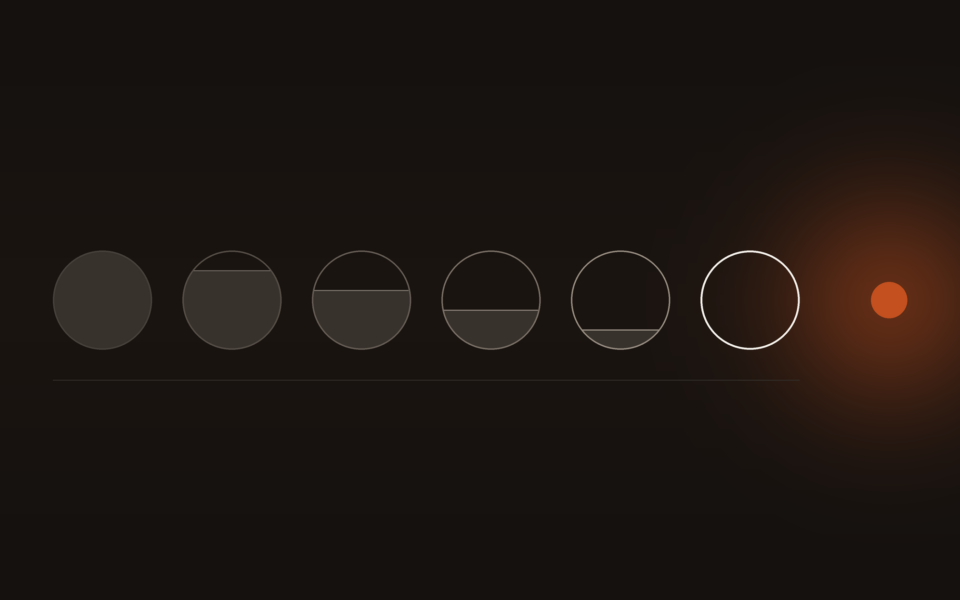
When you violate the natural rhythms of the creative process, there are always side effects. You can go for weeks without noticing them, the way a car can keep running for a while with a knock in the engine, but eventually they show up as apathy, boredom, exhaustion, frustration, and a general lack of ideas. Most of these symptoms trace back to three forces I call the assassins of creativity, because they are stealthy and they quietly neutralize your ability to do your best work. In many organizations, innovation is the rallying cry, but bunting for singles is the everyday ethic, and these three are usually the reason.
The assassins of creativity
Name them, and they lose their power.
Every team experiences all three to some degree. For some, they’ve simply become a way of life.
Dissonance
When the why of your work doesn’t line up with the what of your day. Unclear objectives, unnecessary complexity, and opacity all hijack the mental bandwidth you need for real problems.
Fear
The invisible ceiling. Fear of failure keeps you playing it safe, and fear of success keeps you from reaching for what you might not be able to sustain.
Expectation escalation
Comparing your current work to your past work, your peers, and your heroes. The moment the bar rises too early, you start closing off ideas as not good enough.
Dissonance is a term borrowed from music. It’s the tension a film composer uses to tell you something bad is about to happen before you can see it on screen. Your mind is wired to notice when things don’t add up and to work at resolving them, which is wonderful when you’re solving a creative problem and exhausting when the thing that doesn’t add up is your workplace. Every unclear objective and every system you keep using out of habit rather than by choice spends a little of the attention you need for your actual work.
Fear is the most familiar of the three, and it rarely announces itself. It shows up as an idea you didn’t share in the meeting, or a project you kept small so it couldn’t fail. Expectation escalation is subtler. Comparison is useful once the work is done, but when you hold an unfinished idea up against your best past work or your heroes’ greatest hits, you’ll kill it long before it has the chance to become good. You’d be surprised at how many brilliant ideas are lurking just beyond your initial inhibitions.
Creative rhythmBuild a rhythm that holds under pressure.
I once interviewed a manager I’ll call Amos, a fast-rising leader at a Fortune 100 company who was steering five major projects at once. He told me that the most valuable thing he brought to his company was the ability to generate the right idea at the right moment, and that between the meetings, the email, and the relational demands of his role, there was almost no time left to think. His experience is typical. The one contribution most of us feel most accountable for, bringing fresh ideas to our work, is the first thing that gets squeezed out by everything else.
The answer is to establish your own Creative Rhythm, one that is independent of the pressures and expectations you face each day. That rhythm is set by how you manage five elements, which spell a convenient word.
The FRESH framework
Five elements of a sustainable creative life.
Get these right, and brilliance stops depending on luck.
- F · FocusClarity about what you’re really trying to do, so your effort goes where it matters.
- R · RelationshipsPeople who inspire you, challenge you, and tell you the truth.
- E · EnergyManaging your capacity to engage, not just the hours on your calendar.
- S · StimuliBeing purposeful about what goes into your head, because it shapes what comes out.
- H · HoursProtecting time for the practices that make you effective, not merely efficient.
Focus: zero in on what’s critical.
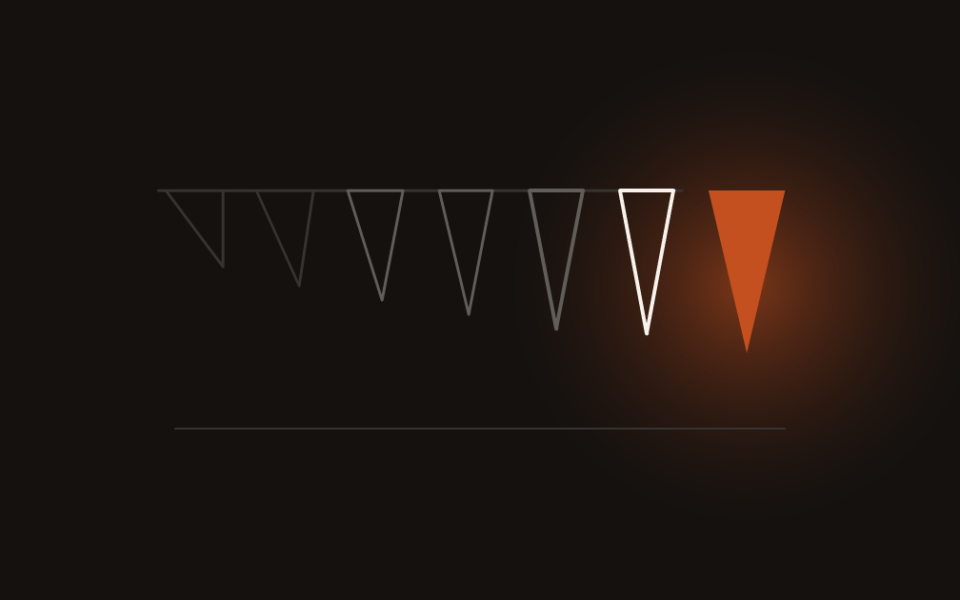
Because creative people gravitate toward possibilities, many of us struggle with focus. We bounce from unsolved problem to unsolved problem, a kind of priority ping-pong that never lets us go deep enough to find real insight. As you work, you tend to fall into one of three modes. A Drifter floats from task to task without thinking about how any of it connects. A Driver overcorrects, maps every step toward the objective, and plows ahead so single-mindedly that he misses the opportunities along the way. A Developer has a strong sense of the objective but treats each task as a chance to make new connections. Developers are world-makers, and they’re the ones who experience the unexpected insights that move a project forward.
Three practices help. First, define the problem by writing Challenges, four to six simple questions that surround each project and tell your mind exactly what to solve. A problem well stated is a problem half solved. Second, refine your priorities with what I call the Big 3, the three most important creative problems you need traction on right now. Mine sit on a whiteboard in my office, and it’s remarkable how often a glance at that list is followed by a breakthrough, simply because those problems were top of mind. The Big 3 isn’t a to-do list or a wish list. It’s a short list of open conceptual loops. Third, cluster similar work together so you aren’t constantly paying the price of switching from one kind of thinking to another.
Relationships: be brilliant together.
Creative work isolates you, because so much of it has to be done alone. Yet other people are one of your most valuable creative resources. A friend of mine likes to say there are two kinds of people in the world: those who live to fill other people’s buckets, and those who are always looking to get their own bucket filled. The first kind tends to do better work, because they aren’t operating from scarcity.
Our best creative work comes from a mind-set of abundance and generosity rather than one of scarcity.
Be purposeful about three kinds of relationships. Start a circle, a small group that meets regularly to share what each person is working on and hold one another accountable. Schedule head-to-heads, one-on-one meetings where each person brings a new idea or resource to share, so you each push the other forward. And establish a core team, a few people whose wisdom you trust enough to bend your choices toward their counsel. Most of us stop being students when we leave school. The most accomplished people I know never did.
Energy: your invisible ally.
Time management alone isn’t enough. It does you no good to account for every minute if you don’t have the energy to be fully engaged during them. One practice that helps is whole-life planning, which simply means refusing to pretend your work and your life live in separate compartments. If something is on your mind, it’s on your mind, wherever it came from. Look ahead each week, each month, and each quarter, and plan for the collisions before they happen.
The other practice is pruning. A good vine keeper cuts away healthy young branches so the nutrients can reach the parts of the vine that bear fruit. You need to do the same with your commitments, including the good ones. As my father-in-law used to tell my wife when she was a child, you can have anything you want, but you can’t have everything you want. Identify your red-zone activities, the few things only you can do that genuinely move your work forward, and protect your energy for them.
Stimuli: what goes in must come out.
The quality of any process depends on the quality of its inputs, and the creative process is no exception. Yet very few people are intentional about what they put into their heads. Can you name the last three books you read, or the last ten web pages you visited? If that’s hard to answer, your inputs are probably more random than you’d like. Build a study plan, a deliberate queue of books, articles, and conversations chosen to fill the gaps you’ll face over the next three months and to follow your genuine curiosity. Take notes that capture your insights, not just the facts, and revisit them, because even the most profound idea can vanish by tomorrow morning. And seek out purposeful experiences that get you away from your screen and into the world, since play and exploration are some of the richest sources of inspiration you have.
Hours: the currency of productivity.
As a creative worker, you’re not really paid for your time. You’re paid for the value you create. That means all minutes are not created equal, and one hour spent well can be worth more than a week of frantic activity. I encourage people to treat their time like an investment portfolio rather than a slot machine. The slot machine player keeps pulling the lever, hoping the next pull pays off. The investor works the plan, knowing the returns will come over time.
In nearly every talk I give, I ask how many people believe great ideas are critical to the future of their career. Nearly every hand goes up. Then I ask how many of them spent any time last week doing nothing but generating ideas. Almost every hand goes down. So start with Idea Time, one hour a week, predictably scheduled, devoted only to generating new ideas for one of your Big 3. It isn’t time to execute. It’s time to think. Then add some Unnecessary Creating, work you make purely for yourself, with no client and no deadline. When everything you create is on demand, you can lose touch with the passions that fuel your best work. Unnecessary Creating is how you get them back.
Putting it togetherCheck your rhythm every week.
None of this works unless it becomes part of how you live. The practices need regular points of friction to keep them on course, the way road signs keep a driver from drifting off the highway. I recommend a short weekly checkpoint, a monthly look at the weeks ahead, and a quarterly step back to look at your life as a whole. Here is the weekly version. I like to do mine on Friday afternoons, so I start the next week already knowing where I’m headed.
Your weekly checkpoint
Five questions to set your rhythm.
Check each one off as you answer it.
Your voiceCover bands don’t change the world.
I spent part of my early career in the music business, and I learned something there that has stayed with me ever since. A cover band plays other people’s music, and it can make a decent living doing it. The audience knows what to expect, and that’s exactly what they came for. But it’s incredibly hard for a cover band to make the leap to playing its own music, because the audience never came to hear it. The bands I watched build careers on original music made that choice from the very beginning, and they earned their fans one at a time.
The marketplace is full of cover bands, people and organizations producing work that sounds like everyone else’s because it’s safe and it pays. The people who change the game are the ones willing to bring their own voice to their work. That starts with understanding the difference between your occupation and your vocation. Your occupation is how you make a living. Your vocation, from the Latin vocare, to call, is what you’re wired for, and it’s less a set of tasks than a set of themes. When your work aligns with it, even a small effort can have an outsized effect, the way the right note can make an entire room vibrate.
Practices are what make that possible over a lifetime. On a family outing years ago, I watched a documentary about beavers. A beaver has no master plan to reshape the landscape. It simply does what it was made to do, day after day, and over time the world around it changes. That’s the power of rhythm. You won’t always see the results right away, but when you show up each day and do the work you were made to do, the cumulative effect can be remarkable.
Remember that plank on Dr. Miller’s table. The force that snapped it was there the whole time, invisible and unappreciated, until someone built the right structure to use it. Your creative capacity is the same. It’s already there. The question is whether you’ll build the practices that let it do its work, so you’re ready when the moment comes.
Build your rhythm now, so that when it counts the most, brilliance is no accident.
Go deeper with The Accidental Creative. Every practice here is unpacked in the book, with stories, examples, and the full weekly, monthly, and quarterly checkpoints. Get the free study guide or explore the book.
Bring these ideas to your team. Brilliance Under Pressure is a keynote that helps teams build the rhythms that make great work consistent.
Explore the keynote
Todd Henry
Todd teaches leaders and teams how to be brave, focused, and brilliant. He’s the author of seven books, including Herding Tigers and The Brave Habit, and host of the Daily Creative podcast.